Reimagine
Identify the strengths, stories, and possibilities already present in a community.
Small town revitalization · Rural & inner-city redevelopment
The Community Reboot brings everyday people, entrepreneurs, innovators, and community leaders together to turn local challenges into real opportunities. By combining community wisdom with AI, entrepreneurship, and collaboration, we believe small towns and neighborhoods can create extraordinary futures.
Reimagining Communities. Creating Opportunities. Building Futures.
Identify the strengths, stories, and possibilities already present in a community.
Use AI, entrepreneurship, and technology to develop practical projects and new economic opportunities.
Bring people together, test ideas, share lessons, and build lasting local momentum.
Community revitalization strategies
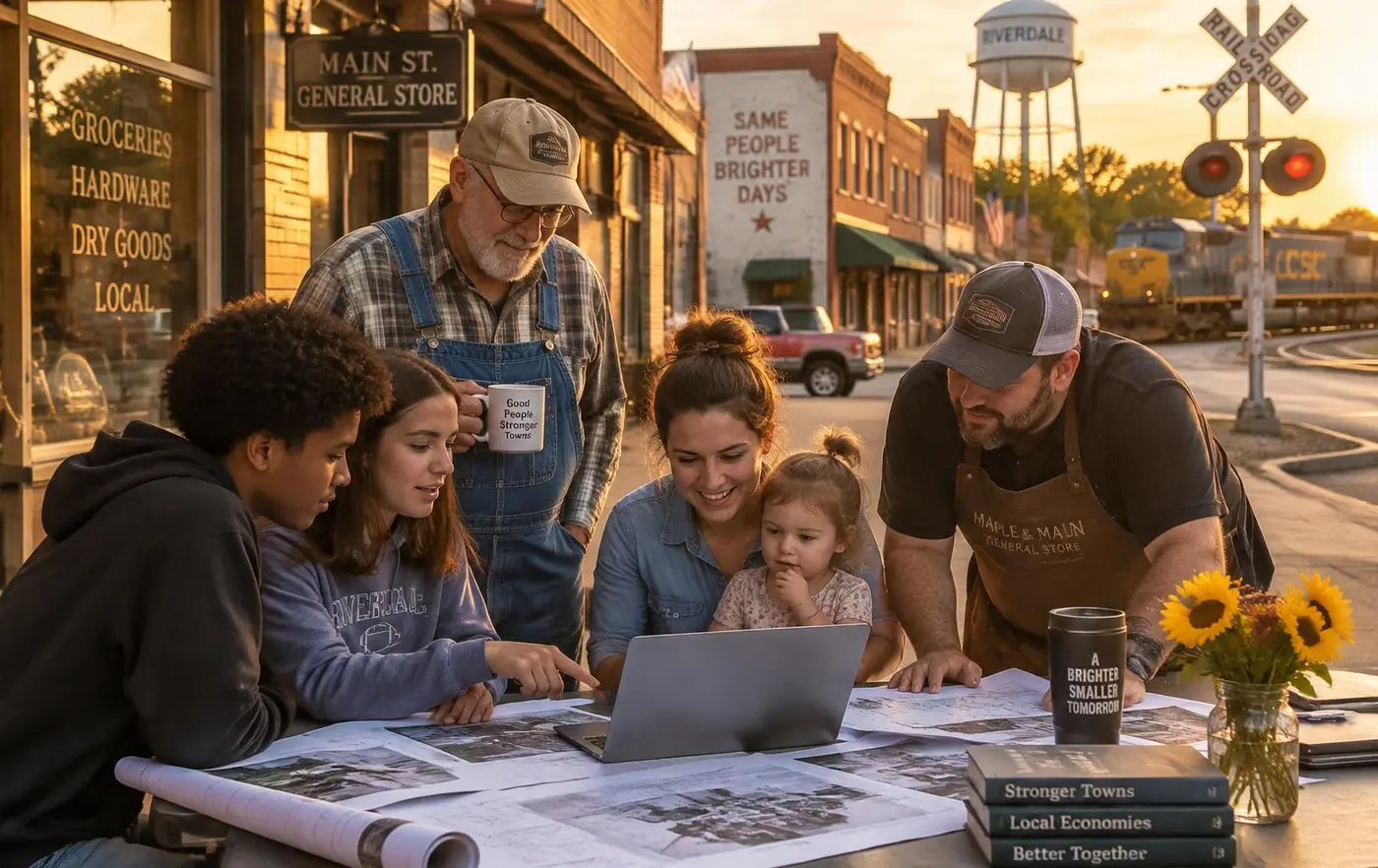
You don't need a large grant or a decade-long master plan to begin. A small, committed team and a practical pilot project can show what is possible, build trust, and create momentum others can join.
The HubCity concept is one illustration: a proposed $10,000, 90-day community pilot for Cordele, Georgia, celebrating railroad history, watermelon heritage, local businesses, tourism, and youth entrepreneurship. It is an example of how a town might start — not a promised outcome.
Questions communities ask
Straight answers about rural community development, AI for small towns, youth entrepreneurship, and community engagement.
Start with what the town already has: its history, landmarks, food traditions, local businesses, and the skills of its residents. Choose one small, visible pilot project — a heritage walking tour, a youth-run market, or a shared local business directory — set a clear time frame, and measure what happens. Free and low-cost AI and no-code tools can handle design, marketing, and websites that once required paid agencies, which keeps more of a small budget focused on people and events.
AI tools can help residents document community assets and stories, draft tourism and business marketing, create flyers, videos, and simple websites, translate materials, analyze survey feedback, and teach entrepreneurship skills. AI does not replace local knowledge or leadership — it lowers the cost and time of turning good local ideas into finished projects.
Affordable ideas include heritage trails and self-guided tours, pop-up markets, seasonal festivals built around local traditions, shop-local digital campaigns, storytelling projects that record elders' memories, youth content-creation teams, and shared community calendars. The common thread is using existing assets and volunteer energy rather than large construction projects.
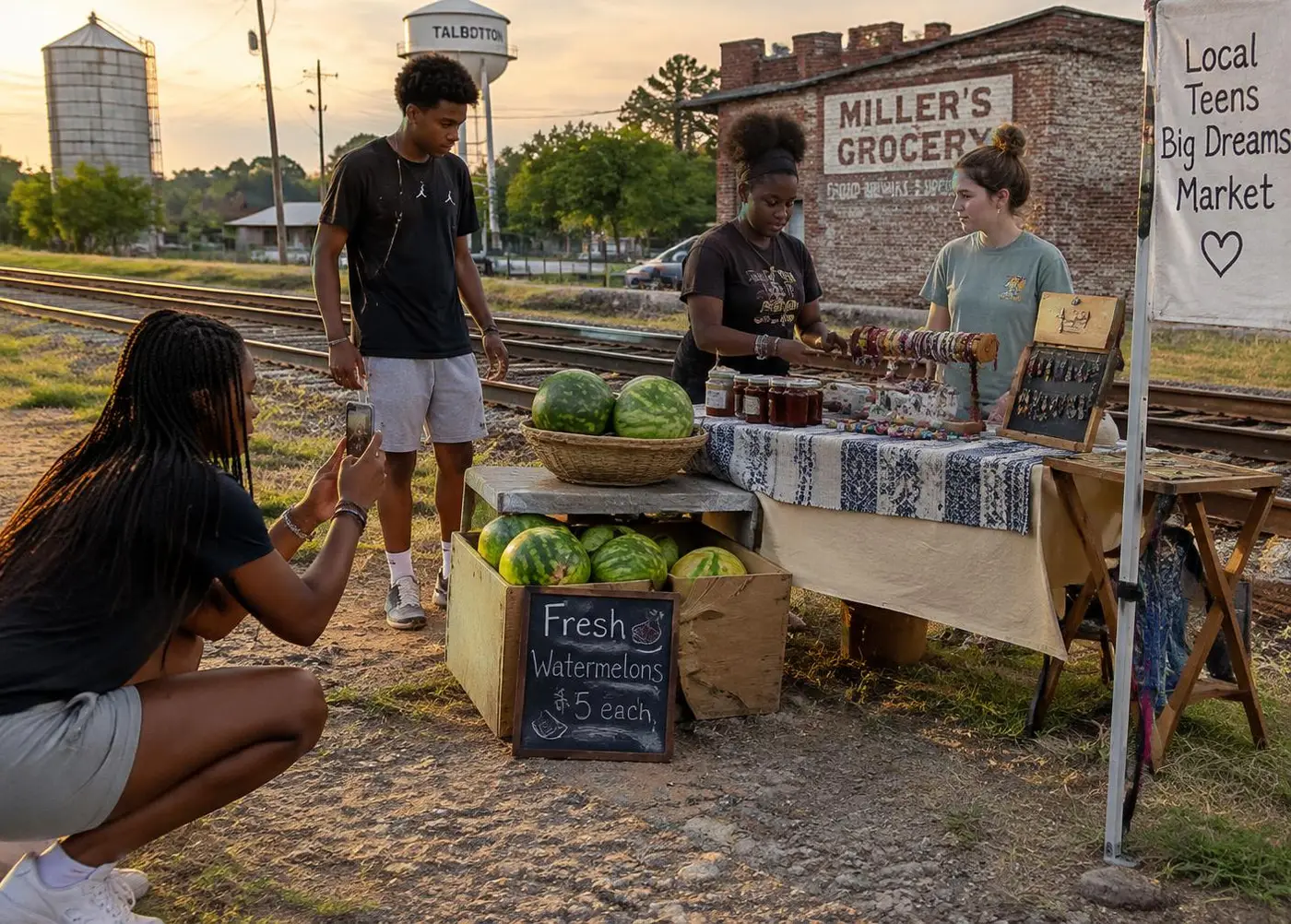
Invite young people in as creators and entrepreneurs, not just volunteers. Teens can run social media for local businesses, photograph and film community events, build simple apps or websites with no-code tools, sell products at markets, and lead tours. Pairing them with local business owners creates real experience, income potential, and a reason to stay connected to their hometown.
A modest budget works best with a focused, time-limited pilot. The HubCity Blueprint is one illustrative example: a proposed 90-day pilot for Cordele, Georgia, built around railroad history, watermelon heritage, local businesses, tourism, and youth entrepreneurship. Results are not guaranteed, and any real project should be shaped by the people who live there.
Begin by listening: talk with neighbors, business owners, young people, and elders about what they value and what they wish existed. Then join or start a small working group, map local assets, pick one practical project, and share progress openly. Two-way communication — not just announcements — keeps more people involved over time.
Rural entrepreneurs can use AI to write product descriptions, design marketing materials, manage social media, build online stores, create tutorials, and offer services such as content creation or virtual assistance to clients outside their area. AI can reduce startup costs, but income still depends on a real product, real customers, and consistent effort.
A community revitalization council is a group of people who meet regularly to share ideas, lessons, and resources for improving their communities. The National Reboot Council, operated by Noise Media Network, is a paid national membership with monthly virtual meetings focused on community ideas, AI, entrepreneurship, and local economic development.
Define a clear purpose, gather a small committed team, identify your community's assets, choose one achievable pilot, set a timeline, and decide how you will measure and share results. Starting small lets you learn quickly, build trust, and grow from real evidence instead of big promises.
Give visitors a reason to come and a reason to stay longer: tell the town's unique story, create simple experiences such as tours, tastings, scavenger hunts, or festivals, and make them easy to find online. Coordinating with local restaurants and shops ensures visitor spending stays in the community.
Yes. The same approach — start from local assets, involve young people, support neighborhood businesses, and use accessible technology — works for underserved urban neighborhoods as well as rural towns. The Community Reboot focuses on small towns, rural communities, and underserved neighborhoods alike.